Find CE ISO RoHS Dental Monitor for Clinics, Labs, and Training
Explore 30 CE ISO RoHS dental monitor options to compare specifications like resolution, connectivity, and sensor types. This guide helps buyers evaluate imaging systems suitable for oral rehabilitation, surgery, and diagnostic departments; compare the available evidence and request quotations based on your requirements.
Key considerations
Products List




Comprehensive Sourcing Guide
CE ISO RoHS Dental Monitor Sourcing Guide
Procurement teams searching for CE ISO RoHS dental monitors are typically equipping imaging workflows in the Oral Rehabilitation Department, where intraoral cameras and display units must work together as a coherent system. Listings observed under this keyword cluster include dedicated display products, dental endoscope intraoral camera systems with integrated touch monitors, and related diagnosis equipment, with observed prices ranging from USD 62 to USD 650 and minimum order quantities spanning 1 to 300 units. That spread signals a marketplace mixing components, accessories, and complete systems, so the first buyer decision is defining whether the monitor is a standalone display or part of an imaging bundle.
This guide helps buyers separate those categories before requesting quotations. Because most listings originate from China and advertise customization and OEM services, disciplined verification of certifications, imaging specifications, and packing terms matters more than headline price. Treat every listed attribute as a seller observation rather than a guaranteed baseline: the sections below translate observed signals—such as HD 5.0 mega pixel sensors, 24-inch 1920x1080 screens, and CE/ISO/RoHS claims—into concrete questions for sampling, contract negotiation, and long-term supply management.
Product Scope and Observed Listing Signals
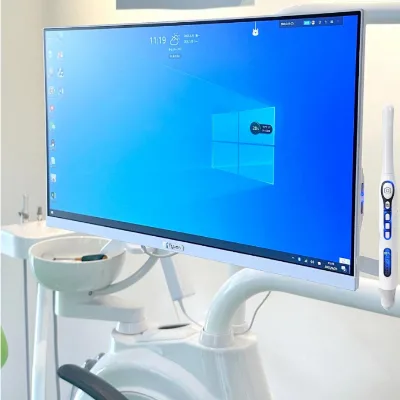
Listings under this keyword fall into recognizable groups. One group covers intraoral camera systems such as models referenced as WM-226-C, WM-226B, and WM-262B, specified with 1/4" Sony CCD or CMOS 1/4 image sensors, USB/VGA output plugs, six-piece 5600K white LED auxiliary light sources, and 5mm–50mm focus ranges. A second group features integrated monitor solutions, exemplified by a "Dental endoscope intraoral camera WIFI touch monitor" with a 24-inch screen, 1920x1080 resolution, 30W power draw, and CMOS 1/2.8 sensor. Products are also typed as Imaging System or Diagnosis Equipment, and some cite the Oral Surgery department as applicable.
Buyers should note packing and packaging conventions observed across listings: standard export cartons, 10pcs/box or 10sets/carton standards, carton-only packing, and a cited single package size of 45.6X42.51X12 cm. Origin is consistently Guangdong, China, and brand names such as "CHARMING OEM" indicate white-label availability. These signals help buyers benchmark whether a quotation covers a bare camera handpiece, a display, or a full camera-plus-monitor imaging package before comparing prices across suppliers.
Technical Specifications to Verify
For imaging performance, confirm the actual sensor specification in writing: listings alternate between 1/4" Sony CCD, CMOS 1/4, and CMOS 1/2.8, and these choices affect low-light behavior and image clarity differently. Verify pixel claims such as HD 5.0 mega pixel against sample images, and check the auxiliary light source—six white LEDs at 5600K or eight-piece LED configurations—since illumination consistency directly affects diagnostic visibility in the 5mm–50mm focus band. Confirm output options (USB/VGA, or WIFI connectivity on touch-monitor models) against your existing operatory hardware.
For display-integrated products, verify the 24-inch monitor size, 1920x1080 screen resolution, and 30W power rating on the actual unit, not just the listing. Some systems run an embedded operating system with remote control, offering 1-picture or 4-picture display modes, automatic backup to SD card with a stated maximum of 256G storage, and JPG picture storage format. Test these workflows during sampling: capture, store, retrieve, and export an image end to end. Also confirm power compatibility (Electric power source, Class II instrument classification where claimed) with your facility's electrical standards before committing to volume.
Compliance and Safety Documentation
Certification claims observed across these listings include CE, ISO, RoHS, and in some cases UL; one listing additionally references a "computer certificate: CE ISO." Do not accept these labels at face value. Request the actual CE declaration of conformity, the ISO certificate number and its scope, and RoHS test reports, then verify certificate numbers against issuing-body databases. Because dental intraoral cameras and monitors typically fall under Class II instrument classification in many regulatory frameworks, ask the supplier to state the classification basis and any registration applicable in your market.
Check which entity holds the certificate: an OEM arrangement may mean the certificate belongs to the original manufacturer, not the trading company quoting you. Confirm whether the certified model number matches the quotation—certificates issued for one model (for example, a WM-series camera) do not automatically cover a different monitor variant. Finally, ask for documentation of electrical safety and, where relevant to your jurisdiction, any market-specific registration for imaging equipment used in diagnosis. Buyers who verify document authenticity before sampling avoid the most common compliance failure: certificates that exist but do not cover the shipped configuration.
Cost Drivers and Commercial Terms
Observed prices from USD 62 to USD 650 reflect real structural differences: a basic intraoral camera handpiece sits at the low end, while integrated 24-inch touch-monitor systems command the upper range. When comparing quotations, normalize for configuration first—sensor type, monitor inclusion, resolution, and light source count all move price materially. Customization and OEM availability are listed broadly, so expect added tooling, branding, or firmware costs when requesting private-label versions; ask whether customization affects the certified configuration and the quoted unit price.
Minimum order quantities observed range from 1 to 300 units, which suggests suppliers segment between sample-friendly and volume-oriented listings. Negotiate MOQ against your pilot-then-scale plan: order one or two units for bench testing, then confirm volume pricing tiers in the same contract. Clarify packing economics explicitly—standard export cartons, 10pcs/box or 10sets/carton conventions, and cited carton dimensions like 45.6X42.51X12 cm affect freight class and per-unit landed cost. Finally, confirm Incoterms, payment structure, and lead time in writing, since none of these are reliably stated in listings and they shape total acquisition cost more than list price.
Supplier Qualification and Quality Control
Qualify suppliers on verifiable capability rather than listing polish. Confirm manufacturing location—Guangdong, China is consistently cited—and determine whether you are dealing with the manufacturer or a trading intermediary, since warranty routing and customization depth differ. Request the ISO certificate and check that its scope covers the product category you are buying. For OEM orders, ask who controls firmware, spare parts, and tooling, because a "CHARMING OEM"-style arrangement can leave buyers dependent on a supplier that may not hold the underlying design.
Build quality control into the purchase itself. Before volume shipment, define an inspection protocol covering sensor output quality, focus behavior across the 5mm–50mm range, LED illumination consistency, monitor dead-pixel checks at 1920x1080, and connector integrity for USB/VGA or WIFI outputs. Ask whether third-party or in-house inspection reports are available, and reserve the right to inspect pre-shipment. Confirm packaging survives export transit: standard export cartons with the stated per-box quantities should be validated with a drop-test sample if quantities justify it. Document acceptance criteria in the purchase contract so that quality disputes reference agreed standards rather than listing descriptions.
Long-Term Procurement Checks
After the initial purchase, sustain supplier performance with structured after-sales verification. Listings commonly promise online technical support and cite shelf life of one year—clarify what the warranty actually covers for both camera and monitor components, and whether replacement parts ship from China or a regional stock. Because several models rely on embedded operating systems and SD-card backup (with a stated 256G maximum), confirm how long firmware updates and software support will remain available; end-of-life on an embedded platform can strand an otherwise functional imaging station.
Plan continuity before you need it. For customized or OEM configurations, secure written agreement on spare-part availability, minimum reorder quantities, and price stability over a defined period. Keep records of the certified configuration, serial-number ranges, and inspection reports for each batch so that any regulatory audit or incident investigation can trace units to their production lot. Re-verify certificates annually, since ISO certificates expire and CE declarations can be withdrawn or revised. Finally, benchmark replacement pricing periodically—observed market ranges shift, and knowing current alternatives strengthens renewal negotiations with your incumbent supplier.
Risk Management and Buying Checklist
Consolidate the above into a pre-order checklist that prevents the most frequent sourcing errors in this category. Before payment, confirm in writing: the exact model and configuration (sensor type, monitor size, output interface, light source), the certification documents matched to that configuration, the packing standard and carton dimensions, the Incoterms and lead time, and the after-sales terms including the one-year shelf-life reference. Request a sample or pilot order wherever the MOQ permits, and test the complete capture-to-display-to-storage workflow on site.
Treat listing attributes as claims to verify, not specifications delivered. Prices spanning USD 62 to USD 650 and MOQs from 1 to 300 units mean two similarly worded listings may describe entirely different products; disciplined buyers separate scope, verify compliance documentation, and inspect samples before scaling. By anchoring each purchase decision to a documented specification and a verified certificate, procurement teams can build reliable dental imaging supply lines from this supplier pool while avoiding the compliance and quality gaps that listings alone never reveal.
FAQs
What certifications do these dental monitors hold?
These dental monitors hold CE, ISO, and RoHS certifications. Some models also include UL certification. These credentials ensure compliance with international safety and environmental standards for medical device manufacturing and usage in clinical settings.
Can these devices be customized for specific clinics?
Yes, customization is available for these dental monitors. Buyers can request OEM services to tailor the equipment to specific brand or operational needs. This flexibility allows clinics to integrate specialized imaging systems that match their existing workflows.
What is the typical price range for these units?
The observed price range for these dental monitors is between 62 and 650 USD. This variation depends on specific models, sensor types, and included accessories. Buyers should check individual listings for exact pricing based on their selected configuration.
Which image sensors are used in these cameras?
These devices utilize various image sensors, including 1/4 inch Sony CCD and CMOS sensors. Some models feature HD 5.0 Mega Pixel resolution. The choice of sensor affects image clarity and performance in different oral rehabilitation and surgery departments.
How are these products packaged for shipping?
Products are packaged in standard export cartons or individual cartons. Specific standards indicate quantities like 10 pieces or 10 sets per carton. This packaging ensures safe transport and protection of sensitive electronic components during international shipping from China.
What is the minimum order quantity for these items?
The minimum order quantity ranges from 1 to 300 units. This flexibility supports both small clinics and large distributors. Buyers can select quantities that match their inventory needs while benefiting from potential volume discounts offered by various suppliers.